


From the outside, your life looks fine. You might even have people telling you how well you’re doing or how much you’ve achieved. And you nod and say thank you while internally dismissing every word because it doesn’t match the version of yourself that lives inside your head.
Low self-esteem doesn’t always look like the person shrinking in the corner. It’s often the one working the hardest in the room and over-delivering on everything, because somewhere along the way you decided that your worth was something you had to earn over and over again but it never stays earned.
At Centered by the Sea, we work with people who are exhausted from trying to become someone they can finally respect. Not because they aren’t already worthy of that respect, but because something convinced them a long time ago that they weren’t enough, and that’s what stuck.
How Low Self-esteem Shows Up
You might not even recognize it as a self-esteem issue because it’s been running in the background for as long as you can remember. It just feels like who you are. You’re the person who says sorry too much and replays conversations for days afterwards picking apart everything you said wrong.
It shapes your relationships in ways you might not connect to self-worth.
You stay with people who treat you poorly because on some level you believe that’s what you deserve. Or you keep everyone at a distance because letting someone see the real you feels like a risk you can’t afford, in case they confirm what you already suspect about yourself.
Achievement becomes a treadmill. You hit a goal and the satisfaction lasts about five minutes before the voice starts up again telling you it wasn’t that impressive, anyone could have done it, and now you’d better find the next thing to prove yourself before people realize you’ve been faking it.
The hardest part is that you’d never talk to another person the way you talk to yourself.
The standards you hold yourself to are brutal and the compassion you extend to everyone around you never turns inward. You know that intellectually. But knowing it doesn’t change it.

What’s Underneath
Self-esteem doesn’t form in a vacuum.
The way you see yourself was shaped by how the important people in your life responded to you when you were young. If your worth was conditional on being useful or being the best, then you learned early that who you are isn’t enough. What you do is what earns love.
For some people it was overt – A critical parent or constant comparison to a sibling. For others it was subtler. A home where your feelings took up too much space and your needs always came second. You might not have dramatic stories to point to and that’s part of what makes it so confusing. You can’t explain why you feel this way because nothing “bad enough” happened.
But the wound doesn’t need to be dramatic to be deep. When a child learns that love has conditions, that lesson doesn’t expire. It follows you into adulthood and it becomes the lens through which you interpret everything. Every compliment gets filtered through it and any success gets diminished by it. All your relationships get distorted by the question, “if they really knew me, would they still be here?”
Our Approach
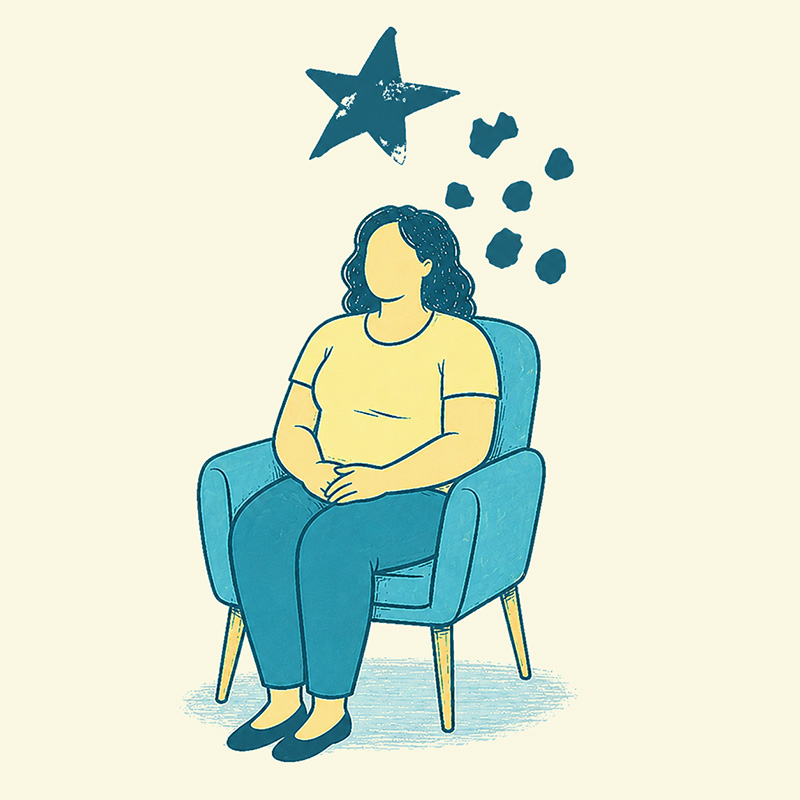
The voice that tells you you're not enough didn't start as yours. It belonged to someone else first and you internalized it so completely that it became indistinguishable from your own thinking. Our work together begins with figuring out where it came from, because that changes everything about how you relate to it.
We pay attention to how this belief system is showing up in your life right now and in what you're willing to tolerate from the people around you.
Those patterns are where the old beliefs reveal themselves most clearly, and they're also where you start to catch them operating in real time.
We also work on the way you speak to yourself, because most people with low self-esteem hold themselves to standards they would never impose on someone they love. Understanding why you do that and where you learned it is what eventually allows that inner voice to lose some of its authority.
Over time we help you build a relationship with yourself that isn't contingent on what you produce or how useful you are to everyone around you. That sounds simple but for most of the people we work with, it's the hardest thing they've ever done.
You've Been Treading Water For Too Long
You've been your own worst critic for long enough. You've built your whole life around a voice that was never yours to begin with and you've never stopped to ask whether it was telling the truth.
Centered by the Sea can help you find out what's on the other side of that question.
Reach Out
Call us 516-123-4568, email hello@centeredbythesea.com, or fill out the contact form and tell us what's going on.
Find Your Fit
We'll check your insurance and match you with the right therapist for what you need.
Start the Work
Meet your therapist in person at our Long Beach office or online from wherever you are.